Aire Anatolia
OR: The Celtic Fremen

As I have already explored the obscure yet rich history of Celts, Scythians, Egyptians and other ancestors/relatives of the Gael across the world, I wish to explore yet another connection between our ancestors and an eastern land. In this blog, I will outline the history of Celts in Anatolia, now known as Turkey. This is part of a two-part series of blogs, Part 2 being a dive into the Mythology of Ancient Ireland and Turkey.

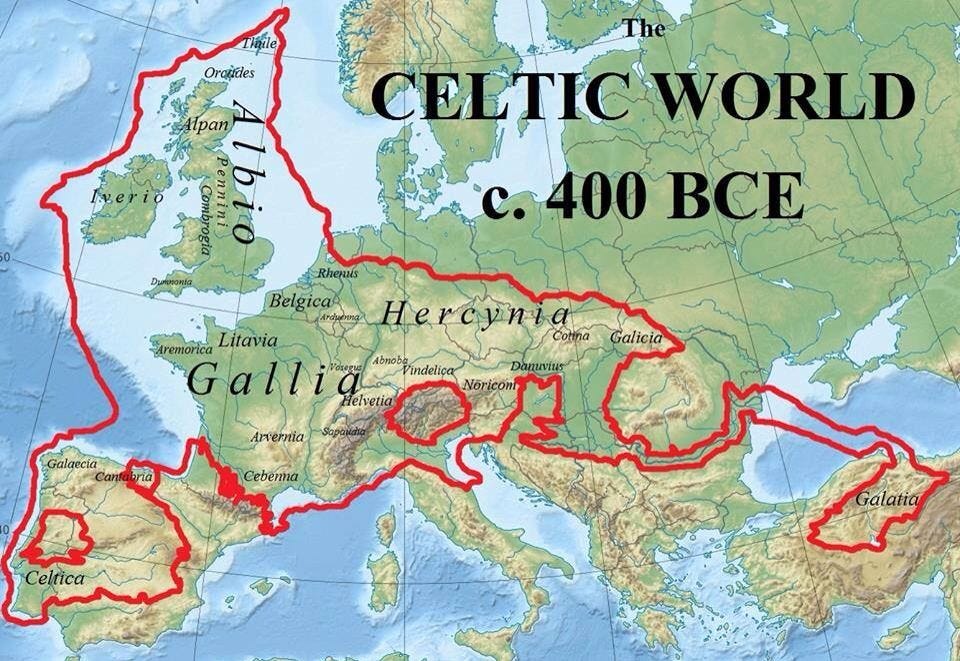
The Galatians were a Celtic tribe who are thought to have come from modern-day France's Gaul region. They entered Asia Minor after invading the Balkans in 278 BCE as part of a greater Celtic migration known as the Gallic invasion of the Balkans. After a while, they made their way to central Anatolia, where they founded several tribe territories.
In the first century BCE, the surrounding area of Galatia was influenced by the Romans. Following Galatia's king Deiotarus's defeat in 25 BCE, the Roman Empire seized Galatia and turned it into a province. This signalled the start of Roman dominance over the area.
Celtic, Greek, and native Anatolian cultures interacted and exchanged cultural ideas as a result of the Galatians' presence in Anatolia. The Galatians retained some of their Celtic customs and language while also absorbing aspects of the Anatolian local culture over time.
The Testament contains references to the Galatians, especially inthe Epistle to the Galatians, written by the apostle Paul. The religious and cultural reality of the area in the early Christian era is reflected in this epistle, which was written to the Christian communities in Galatia.
Ancient Galatia was home to several important cities, including Ancyra (modern-day Ankara), the capital of the province, as well as Pessinus, Tavium, and Gordium. These cities served as centers of administration, commerce, and culture within the region.
Turkey now bears many traces of the ancient Galatians and the Galatians themselves. Place names, ruins, and cultural influences all attest to the Galatians' historical significance in the area. Furthermore, Christian communities all across the world continue to study and honour the Epistle to the Galatians.